What a Safety Vacuum Release System Does and How a Breather Vents a Blocked Suction Line
A Breather does one narrow job very fast: when something seals off the suction side, it lets air in so the pump stops pulling.
October 27, 2026 · 4 min read
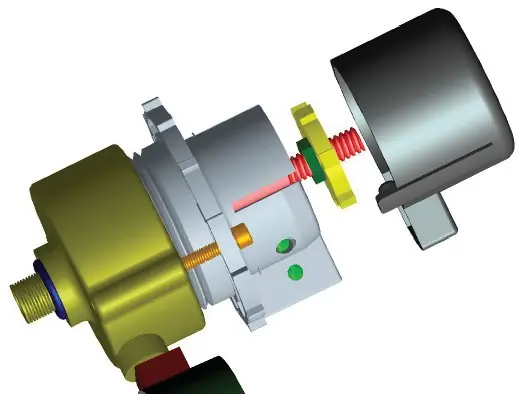
A pool pump is a suction machine. The impeller pulls water from the pool through the main drain and skimmer lines, pushes it through the filter and heater, and sends it back through the returns. While water moves freely, the suction side runs at a mild vacuum. Block the line and that changes in a hurry.
Centrifugal pumps of the kind installed on pools, spas and hot tubs create high vacuum at the pump inlet once something obstructs the suction side. That is the hazard behind drain entrapment. If a swimmer's body, limb, hair or swimwear covers a main drain, the pump keeps pulling against the obstruction, and the force holding the person in place can be more than they can overcome. A safety vacuum release system, or SVRS, exists to break that hold quickly.
The one job an SVRS has
Vacless describes the anti-entrapment function plainly. Ambient air rapidly fills the pump suction side during a high vacuum event, the pump loses prime, and the entrapment releases. That is the whole idea. No water at the impeller, no suction at the drain. A pump that has lost prime cannot hold anyone against a cover.
The federal Virginia Graeme Baker Act uses a broader description of the category. Its text calls for a system that ceases operation of the pump, reverses the circulation flow, or otherwise provides a vacuum release at a suction outlet when a blockage is detected. The Breather vents the pump to release the vacuum. The electrical Breather III also shuts the pump off.
What happens inside a Breather
The Breather is a valve that threads into the suction side drain plug port of the pump, so it sits right at the pump pot. During normal filtration a seal inside keeps outside air out. Vacless describes an orthogonal seal system: a rubber o-ring mounted on a moving disc, sealing on the face and on the radius. The face seal blocks atmospheric air from entering the pump during normal operation. The radial seal governs how far the seal travels before it opens a path for air into the pump pot.
When a blockage drives the vacuum up, a pressure difference builds across that seal. Atmospheric pressure pushes the seal against a spring. Once the o-ring crosses a set of grooves, air channels open and air floods the pot. The pump loses prime and the pull on the drain goes slack. The company says the entire seal travel happens within milliseconds.
What the valve does next depends on the line. On the Breather I the seal springs back to its normal position on its own, and the pump can re-prime. On the Breather II the seal stays locked open until someone pulls it back by hand. On the Breather III a limit switch also signals the control box to turn the pump off, and a three minute delayed restart and audible alert come with it. The article on choosing between the three goes through those differences.
Two side duties for the same valve
The valve does two other jobs on the same port, according to the manufacturer.
- Surge suppression. Vacless says the valve arrests the sudden vacuum rise at pump start-up by letting a quick gasp of air in while the seal is momentarily depressed. It credits this with protecting the pump and filtration equipment from shocks and vibration, which it ties to lower maintenance cost, less downtime and longer equipment life.
- Winterization. Taking the valve out opens the drain plug port so the pump can empty completely. The company's wording is to remove the SVRS until all of the water in the pump is fully drained.
What a Breather does not do
It does not replace the drain cover. Vacless says its systems provide a layer of certified protection against body and limb entrapment and should always be used together with an approved anti-entrapment drain cover.
It does not replace supervision either. In the company's own words, nothing replaces parental supervision, but having multiple layers of protection is the best way to prevent main drain entrapments.
The valve also has to suit the installation. The Breather line is designed for pumps from 0.5 to 10.0 horsepower, and the adjustable models are compliance tested up to 200 feet, per Vacless. Match the model to the pump and piping.
Why this matters at the counter and on the pad
If you work a distributor counter, the question you will hear is some version of what that black valve on the pump is for. The short answer is that it is a vacuum release: it gives air a way into the pump the moment the suction side seals off. If you build or manage a facility with a single main drain, it is one of the devices the federal Act lists, and the Act article on this site walks through the wording.
Vacless Systems Inc. designs and manufactures the Breather line in Canoga Park, California, and sells to wholesale distributors and dealers. Service providers and end users can use the dealer locator on this site to find the nearest distributor, and tech support is at (818) 701-6204.
Vacless, (818) 701-6200
Call (818) 701-6200More articles
Choosing Between Breather I, II and III: Automatic, Manual or Electrical
Twelve versions sounds like a lot until you see that the choice comes down to four questions you can answer from the equipment pad.
What the Virginia Graeme Baker Act Asks of Public Pools and Spas With a Single Main Drain
The Act is short on jargon and long on consequences, and one clause about single main drains is the reason many facilities fit a vacuum release system.